

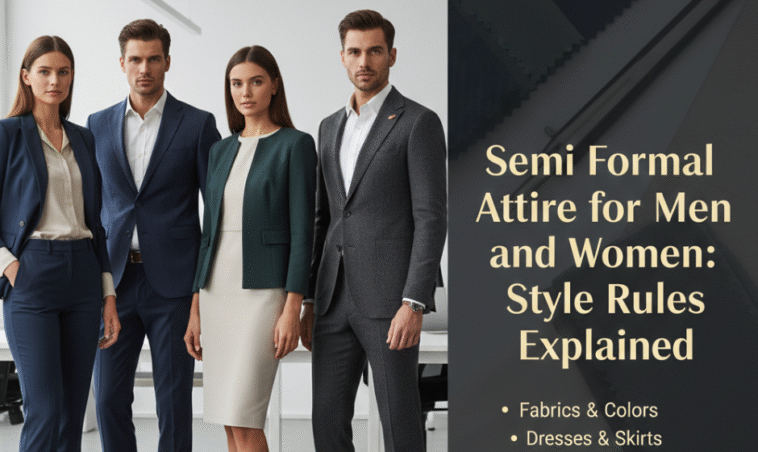
Navigating dress codes can be tricky, and semi formal attire is often one of the most confusing. It sits between formal and business casual, leaving many unsure how to dress appropriately for weddings, corporate events, or evening gatherings. Choosing the wrong outfit can make you appear either overdressed or underdressed, which may affect first impressions and confidence.
Understanding semi formal attire is not about memorizing a list of clothing items, it’s about grasping proportions, fabrics, colors, and accessories that align with modern style expectations. This guide will break down the rules for men and women, explore differences between semi formal and other dress codes, offer practical outfit ideas, and highlight common pitfalls to avoid.
By the end, you’ll know how to dress smartly and confidently, ensuring your semi formal attire projects professionalism, elegance, and personal style in any setting.
What Semi Formal Attire Really Means
Semi formal attire is a step above business casual but less rigid than black tie. It requires polished, coordinated outfits that convey sophistication without being overly ceremonial.
Key characteristics of semi formal attire include:
- Structured clothing: Blazers, tailored dresses, and dress shirts create clean silhouettes.
- Refined fabrics: Wool, silk, or high-quality cotton for clothing; leather or patent finishes for shoes.
- Neutral or muted colors: Navy, gray, black, beige, or jewel tones work best.
- Attention to details: Accessories and grooming are essential.
Unlike casual outfits, semi formal attire demands thoughtfulness. Unlike formalwear, it allows for flexibility, personal style, and comfort.
Semi Formal Attire vs Other Dress Codes
Understanding semi formal attire requires knowing where it falls among other dress codes:
| Dress Code | Key Features |
| Casual | Jeans, t-shirts, sneakers, casual layering |
| Smart Casual | Blazers, clean trousers, casual dresses, loafers |
| Semi Formal | Tailored suits, cocktail dresses, dress shirts, refined accessories |
| Formal / Black Tie | Tuxedos, evening gowns, luxury fabrics, dressy shoes |
| Business Casual | Collared shirts, slacks, skirts, minimal accessories, more relaxed than semi formal |
Tip: Semi formal is the “safe middle ground” that works for most events when unsure of dress expectations.
Semi Formal Attire Guidelines for Men
Men’s semi formal attire focuses on tailored pieces, structured fits, and complementary colors.
Essential Components
- Suit or Blazer
- Navy, charcoal, or black suits work well.
- Blazers with tailored trousers are acceptable if full suits are too formal.
- Navy, charcoal, or black suits work well.
- Dress Shirt
- Crisp, long-sleeved shirts in white, light blue, or subtle patterns.
- Avoid loud colors or overly casual fabrics like denim.
- Crisp, long-sleeved shirts in white, light blue, or subtle patterns.
- Trousers
- Tailored, well-fitted trousers matching or coordinating with the blazer.
- Avoid jeans or cargo pants.
- Tailored, well-fitted trousers matching or coordinating with the blazer.
- Shoes
- Leather oxfords, derbies, or loafers.
- Darker shades complement the outfit and elevate the look.
- Leather oxfords, derbies, or loafers.
- Accessories
- Minimalist ties or pocket squares for style.
- Leather belt matching shoes, wristwatch, and neat grooming.
- Minimalist ties or pocket squares for style.
Pro Tip: Fit is more important than brand. A tailored suit in a muted color can outperform an expensive but ill-fitting ensemble.
Common Mistakes for Men
- Wearing casual shoes (sneakers or sandals)
- Oversized or untailored blazers
- Loud patterns that clash with the semi formal vibe
- Skipping grooming details (hair, facial hair, nails)
Avoiding these pitfalls ensures the outfit looks polished without being too formal.
Semi Formal Attire Guidelines for Women
Women’s semi formal attire blends elegance and comfort while remaining versatile for evening or daytime events.
Outfit Options
- Dresses
- Cocktail dresses or knee-length tailored dresses in classic colors.
- Avoid floor-length gowns (formal) or overly casual sundresses.
- Cocktail dresses or knee-length tailored dresses in classic colors.
- Tops and Skirts / Trousers
- Blouses with structured skirts or high-waisted tailored pants.
- Fabrics like silk, satin, or crepe enhance sophistication.
- Blouses with structured skirts or high-waisted tailored pants.
- Footwear
- Heels, flats, or elegant loafers.
- Avoid sneakers, flip-flops, or overly casual sandals.
- Heels, flats, or elegant loafers.
- Accessories
- Minimal jewelry, clutch bags, subtle belts, and scarves.
- Statement pieces should complement, not overpower, the outfit.
- Minimal jewelry, clutch bags, subtle belts, and scarves.
- Outerwear
- Structured blazers or light coats for layering, depending on season.
- Structured blazers or light coats for layering, depending on season.
Tip: Necklines and hemlines should remain modest and balanced to maintain semi formal elegance.
Common Mistakes for Women
- Wearing overly flashy or sequined dresses suitable for formal events
- Over-accessorizing with multiple large jewelry pieces
- Choosing casual footwear like sneakers
- Mismatched color palettes or textures
Focus on proportion, color coordination, and balance for a truly semi formal look.
Seasonal and Event-Based Adjustments
Semi formal attire is flexible, but seasonal and event considerations matter:
- Summer: Lighter fabrics like linen or cotton; pastel or light colors; open-toe shoes acceptable for women.
- Winter: Wool, tweed, or heavier blends; darker tones; closed-toe shoes and layering.
- Day Events: Softer colors and less metallic accessories; lighter fabrics.
- Evening Events: Darker colors, sleek silhouettes, slightly elevated accessories.
Understanding context ensures your semi formal attire aligns with expectations.
Styling Tips for Both Men and Women
- Stick to neutral or complementary colors for effortless coordination.
- Invest in quality footwear; polished shoes elevate the overall look.
- Avoid over-accessorizing; subtle details convey refinement.
- Pay attention to fit and tailoring; nothing compensates for poor fit.
- Match belts and shoes for a cohesive appearance.
Small details like cufflinks, watches, or scarves signal attention to style and polish without overdoing it.
Semi Formal Attire for Business vs Social Events
Business Semi Formal
- Conservative colors: navy, gray, black
- Minimal patterns and accessories
- Tailored suits, knee-length skirts, buttoned shirts
- Purpose: convey professionalism and competence
Social Semi Formal
- Allows more personal expression through color, patterns, and fabrics
- Women can explore cocktail dresses or stylish separates
- Men can wear ties, patterned shirts, or pocket squares
- Purpose: balance elegance with comfort and social flair
Case Note: A corporate dinner may require subdued semi formal attire, while a wedding reception allows slightly bolder choices.
Pros and Cons of Semi Formal Attire
Pros
- Flexible for most events
- Balances comfort and elegance
- Allows personal expression while remaining professional
- Easy to mix-and-match pieces for different occasions
Cons
- Can be confusing for first-timers
- Requires attention to detail and proper fit
- Mistakes can result in appearing too casual or overdressed
Tip: When in doubt, err slightly more formal rather than too casual. Semi formal leans toward refined presentation.
Accessories That Enhance Semi Formal Attire
- Men: Leather belts, wristwatches, subtle ties, pocket squares, cufflinks
- Women: Simple earrings, bracelets, clutches, scarves, subtle rings
- Shared: Avoid overly flashy or costume jewelry; minimal elegance works best
Accessories serve as finishing touches that signal style consciousness and attention to detail.
Color Coordination and Patterns
- Stick to muted or neutral palettes: black, navy, beige, gray, cream
- Add accent colors subtly through ties, scarves, or jewelry
- Patterns should be understated: pinstripes, herringbone, small prints
- Avoid clashing bold patterns or neon colors that break semi formal balance
Mini-Summary: Key Takeaways
- Semi formal attire bridges casual and formal, requiring tailored clothing and thoughtful accessories.
- Men: suits, dress shirts, leather shoes, minimal accessories.
- Women: cocktail dresses, tailored trousers/skirts, elegant footwear, minimal accessories.
- Event context, season, and personal fit are essential for appropriateness.
- Avoid common mistakes like poor fit, flashy patterns, casual shoes, and over-accessorizing.
Mastering these rules ensures confidence and a polished, professional appearance.
Conclusion: Dressing Smartly with Semi Formal Attire
Understanding semi formal attire is crucial for navigating modern events, whether social gatherings, weddings, or corporate functions. The key lies in balance: combining structured clothing, refined fabrics, muted colors, and subtle accessories to convey sophistication without rigidity.
By following the guidelines outlined above, both men and women can achieve looks that are elegant, versatile, and appropriate across seasons and events. Paying attention to fit, details, and context ensures your semi formal attire communicates confidence, professionalism, and style effortlessly.
FAQs
1. What is considered semi formal attire?
Semi formal attire is a dress code between casual and formal, including tailored suits for men and cocktail or knee-length dresses for women, paired with refined accessories.
2. How does semi formal attire differ from business casual?
Business casual is more relaxed, often without suits or ties. Semi formal attire requires structured clothing, polished shoes, and accessories that elevate the look.
3. Can men wear patterned shirts for semi formal events?
Yes, subtle patterns like thin stripes or small checks are acceptable, but avoid bold or flashy prints that distract from a polished appearance.
4. Are heels required for women’s semi formal attire?
No. Elegant flats or loafers can also work. The key is polished, stylish footwear that complements the outfit.
5. What accessories are appropriate for semi formal events?
Minimalist watches, belts, pocket squares for men; subtle jewelry, scarves, and clutch bags for women. Avoid overly flashy or costume accessories.
6. Can semi formal attire be worn in summer weddings?
Yes. Choose lighter fabrics, pastel or muted colors, and breathable layers for comfort while maintaining elegance.
7. Is semi formal attire appropriate for corporate dinners?
Absolutely. Stick to conservative colors and tailored clothing to convey professionalism and elegance.