
Strong, well-developed arms are not just about appearance they are essential for pulling strength, grip endurance, and overall upper-body performance. Among the many arm exercises available, hammer curls stand out as one of the most practical and underrated movements. Unlike traditional biceps curls that emphasize only the front of the upper arm, hammer curls target deeper muscles that significantly affect arm thickness, forearm strength, and functional power.
If you’ve ever struggled to build balanced arms, improve grip strength, or progress in pulling movements, curls deserve a permanent place in your routine. This guide breaks down everything you need to know: what curls are, which muscles they train, how to perform them correctly, their benefits and limitations, common mistakes, and the most effective variations.
Whether you’re a beginner learning the basics or an experienced lifter refining technique, this complete curls exercise guide will help you train smarter, safer, and more effectively.
What Are Hammer Curls?
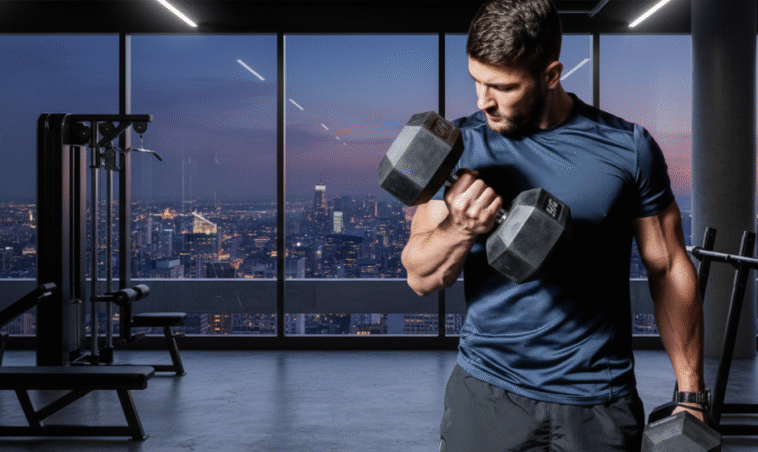
Hammer curls are a dumbbell-based arm exercise where the palms face each other throughout the movement, similar to holding a hammer. This neutral grip changes muscle recruitment compared to traditional curls.
Instead of isolating only the biceps brachii, curls place greater emphasis on the brachialis (a deep upper-arm muscle) and the brachioradialis (a major forearm muscle). These muscles contribute heavily to elbow flexion, arm thickness, and grip strength.
Because of this, there are both aesthetic and functional exercises. They improve how your arms look and how they perform during pulling, carrying, and lifting movements.
Hammer curls are commonly performed with dumbbells, but cables, resistance bands, kettlebells, and even ropes can be used to create similar patterns.
Primary Muscles Worked in Hammer Curls
Hammer curls are not a one-muscle exercise. They involve a network of upper-limb muscles working together.
The main muscles activated include:
- Brachialis: Located beneath the biceps, this muscle is the primary driver of elbow flexion in a neutral grip. Developing it makes the upper arm look thicker from the side.
- Biceps brachii: Although less emphasized than in supinated curls, the biceps still play a strong supporting role.
- Brachioradialis: This large forearm muscle contributes to both elbow flexion and forearm development.
- Forearm flexors: These stabilize the wrist and improve grip strength.
Secondary stabilizers include the anterior deltoids, rotator cuff muscles, and core, especially when heavier loads are used.
This multi-muscle involvement is one reason hammer curls are so effective for complete arm development.
Why Hammer Curls Matter in Strength Training
Many lifters over-prioritize traditional curls and neglect neutral-grip movements. This often leads to strong biceps but underdeveloped supporting muscles.
Hammer curls correct this imbalance.
They build arm strength that transfers directly to real-world and gym performance. Pull-ups, rows, deadlifts, and loaded carries all benefit from stronger brachialis and forearms.
From an injury-prevention perspective, curls place less rotational stress on the elbow joint, making them more joint-friendly for many lifters.
They also help overcome arm-training plateaus. If your biceps curls have stalled, adding curls often reignites growth by targeting neglected muscle fibers.
Key Benefits of Hammer Curls
Hammer curls deliver a wide range of physical benefits when performed consistently and correctly.
Increased Arm Thickness
Because they heavily recruit the brachialis, hammer curls contribute more to side-arm thickness than standard curls. This gives the arms a fuller, denser look.
Improved Forearm Development
Hammer curls directly load the brachioradialis, creating stronger, more visible forearms without separate isolation work.
Better Grip Strength
Holding dumbbells in a neutral grip challenges the hand and forearm muscles, supporting grip-intensive lifts like deadlifts and rows.
Functional Carryover
Hammer curls mimic real-life lifting patterns, improving performance in sports, manual tasks, and compound gym movements.
Elbow-Friendly Mechanics
The neutral wrist position often feels more natural and less stressful for people with elbow or wrist sensitivity.
Balanced Arm Development
They complement traditional curls, preventing muscle imbalances and supporting long-term joint health.
How to Do Curls with Proper Form
Correct technique determines whether hammer curls build muscle safely or strain joints unnecessarily.
Step-by-Step Hammer Curl Technique
- Stand tall with a dumbbell in each hand, arms at your sides.
- Keep your palms facing each other, thumbs pointing upward.
- Engage your core and set your shoulders down and back.
- Curl the weights upward by bending your elbows only.
- Lift until the dumbbells reach shoulder height.
- Pause briefly, squeezing your arms.
- Lower slowly to the starting position under control.
Your elbows should remain close to your torso throughout the movement.
Your wrists should stay neutral to avoid bending them backward.
Your torso should remain still. Momentum reduces muscle activation and increases injury risk.
Breathing and Tempo for Better Results
Breathing may seem minor, but it directly affects stability and power.
Exhale as you lift the weights.
Inhale as you lower them.
A controlled tempo maximizes muscle tension. A good general rhythm is one second up and two to three seconds down.
Slower lowering phases increase time under tension, which is beneficial for hypertrophy and joint health.
Common Hammer Curl Mistakes to Avoid
Even simple exercises can lose effectiveness when done poorly.
One frequent mistake is using excessive weight. When loads are too heavy, the shoulders and lower back take over.
Another common issue is swinging the arms. Momentum removes tension from the target muscles.
Some lifters flare the elbows outward, shifting emphasis away from the brachialis.
Others bend the wrists, placing unnecessary stress on joints.
Finally, many people rush the movement, turning controlled curls into partial lifts.
Correcting these mistakes improves both safety and results.
Hammer Curls vs Traditional Biceps Curls
Both are not competitors, they are partners.
Traditional curls use a supinated grip and emphasize the biceps peak.
Hammer curls use a neutral grip and emphasize arm thickness, forearms, and grip.
If traditional curls build the front of the arm , curls build the side and depth.
An effective arm program includes both, ensuring complete muscular development.
Hammer Curl Variations to Enhance Your Training
Variety prevents stagnation and allows targeted progression.
Alternating Hammer
Lifting one arm at a time improves focus and reduces momentum.
Cross-Body Hammer Curls
The dumbbell is curled toward the opposite shoulder, increasing brachioradialis involvement.
Seated Hammer
Sitting removes lower-body assistance, improving strict form.
Incline Curls
Performed on a bench, this variation increases stretch and difficulty.
Rope Curls (Cable)
Provides constant tension and smoother resistance through the range of motion.
Resistance Band
Great for joint-friendly training and home workouts.
Each variation changes leverage and muscle emphasis slightly, keeping progress consistent.
Programming Hammer Curls for Different Goals
For Muscle Growth
Use moderate weights for 8–12 reps and 3–4 sets.
Rest 45–75 seconds between sets.
Focus on slow negatives and full range of motion.
For Strength
Use heavier loads for 4–6 reps and 4–5 sets.
Rest 90–120 seconds.
Maintain strict form and controlled speed.
For Endurance and Grip
Use lighter weights for 12–20 reps.
Minimize rest.
Consider timed sets or drop sets.
Consistency matters more than variation. Choose one or two hammer curl types and progress them over weeks.
Where Hammer Curls Fit in Your Workout
Hammer curls typically work best after compound pulling movements.
Place them after rows, pull-ups, or lat pulldowns.
They also pair well with triceps exercises in arm-focused sessions.
Avoid placing heavy curls before grip-intensive lifts, as forearm fatigue may reduce performance.
Equipment Choices and Their Impact
Dumbbells are the most common tool because they allow independent arm movement and natural wrist positioning.
Cables maintain constant tension, improving muscle engagement.
Kettlebells increase forearm involvement due to offset loading.
Bands offer accommodating resistance and joint comfort.
Each option offers a unique stimulus while preserving the hammer curl pattern.
Micro Case Note: Why Many Lifters Plateau Without Hammer Curls
Many training plateaus occur not from lack of effort, but from incomplete muscle development.
Lifters who only perform supinated curls often develop strong biceps but weak brachialis muscles.
This imbalance limits pulling power and visual arm thickness.
Adding hammer curl frequently resolves this by strengthening deeper elbow flexors, which then support heavier compound lifts and stimulate renewed growth.
Safety Considerations and Realistic Limits
Hammer curls are generally safe, but not risk-free.
Excessive weight, rapid motion, and poor wrist alignment increase elbow strain.
People with tendon irritation should reduce volume, slow the tempo, and avoid extreme loads.
Progressive overload should be gradual. Arm muscles respond well to consistency, not aggressive jumps.
Pain in joints is a warning sign. Muscle fatigue is acceptable. Joint pain is not.
How Hammer Curl Support Long-Term Arm Health
Neutral-grip exercises distribute stress more evenly across elbow structures.
This reduces overuse strain commonly associated with repetitive supinated curling.
Hammer curls strengthen supportive tissues, improving resilience and long-term performance.
For this reason, many physical therapists and strength coaches recommend curls for both rehabilitation and prehab work.
Mini-Summary: Why Hammer Curls Deserve Priority
Hammer is not just a biceps exercise. They are a complete arm-strength movement.
They build deeper upper-arm muscles, enhance forearm size, support grip strength, and improve pulling power.
They are joint-friendly, versatile, and effective across fitness levels.
When programmed intelligently, hammer curls improve both aesthetics and performance.
Conclusion: Building Stronger, Smarter Arms with Hammer Curls
Hammer curls may look simple, but their impact on arm development and functional strength is profound. By emphasizing the brachialis and forearms, they fill a critical gap left by traditional curls. They improve arm thickness, enhance grip, and support the strength needed for larger compound lifts.
Whether your goal is muscle growth, athletic performance, or joint-friendly training, curls offer a reliable and efficient solution. When performed with proper form, programmed wisely, and progressed patiently, they become one of the most valuable tools in any upper-body routine.
FAQs
1. What muscles do curls work most?
Hammer curls primarily target the brachialis and brachioradialis, with strong assistance from the biceps and forearm flexors.
2. Are hammer curls better than regular curls?
they are not better, but different. They emphasize arm thickness and forearms, while traditional curls emphasize the biceps peak. Both are valuable.
3. How often should I train hammer curls?
Most lifters benefit from including curls one to two times per week, depending on volume and recovery.
4. Can beginners do hammer curls safely?
Yes. They are beginner-friendly when performed with light weights, controlled motion, and proper posture.
5. Do hammer curls build grip strength?
Yes. Because the neutral grip loads the forearms and hands, hammer curls help improve grip endurance and control.
6. Should curls be heavy or light?
Both can work. Moderate weights for controlled reps are best for muscle growth. Heavier weights support strength when form remains strict.
7. Are hammer curls effective for arm size?
Yes , Contribute significantly to upper-arm thickness and forearm development, improving overall arm size.