
If you’ve ever admired lush, layered white flowers cup blossoms at a florist or in spring gardens, chances are you’ve fallen for ranunculus also known as buttercup flowers. These radiant blooms, with their paper-like petals and vivid hues, resemble miniature peonies or roses. Gardeners adore them for their long vase life, dense petal count, and the way they light up beds and borders with romantic charm.
Yet many beginners hesitate to grow ranunculi because they believe these delicate flowers are hard to cultivate. The truth? With the right soil, temperature, and a few easy steps, planting ranunculus is simpler than most think.
This complete guide will walk you through how to choose bulbs (technically called corms), prepare your soil, care for your plants, and keep those buttercups blooming beautifully all from the comfort of your backyard.
Understanding the Ranunculus: Nature’s Paper Petal Wonder
What Is a Ranunculus Flower?
The ranunculus flower belongs to the Ranunculaceae family, which includes more than 400 species. Native to the Mediterranean and Asia, these blooms are prized for their multi-layered petals and brilliant colors ranging from ivory and peach to scarlet, pink, and golden yellow.
Gardeners often call them “buttercups” because of their glossy, reflective petals. The most commonly grown type for gardens is Ranunculus asiaticus, a hardy, cool-season flower known for its strong stems and spectacular form.
Why Ranunculus Are a Gardener’s Favorite
- Long-lasting blooms: Perfect for floral arrangements.
- Compact growth habit: Great for containers or borders.
- Wide color palette: Works with nearly any garden theme.
- Symbolism: Represents charm, radiance, and attraction ideal for romantic gardens.
The Different Types of Ranunculus Flowers
1. Persian Buttercup (Asiaticus)
The classic garden variety, Persian ranunculus produces large, ruffled blooms ideal for cut flowers. It thrives in mild climates and performs best in well-draining soil.
2. Tecolote
Developed in California, Tecolote varieties are known for their giant, vibrant blooms and sturdy stems perfect for display gardens and floral bouquets.
3. Bloomingdale
A dwarf hybrid ideal for containers or window boxes. Despite its smaller size, it blooms profusely and produces a full range of colors.
4. Pon-Pon Ranunculus
This variety features petals with soft textures and unique shades, often bi-colored or fringed, adding a whimsical look to garden beds.
Each type offers a distinct beauty, but all follow the same basic planting and care principles.
Planning Your Garden
Choosing the Right Location
Ranunculus prefer full sun, thriving in areas that receive at least 6 hours of direct light daily. Avoid low spots where water collects these flowers and dislike soggy roots.
Ideal Soil Conditions
- Soil Type: Light, loamy, and well-draining.
- pH Level: Slightly acidic to neutral (6.0–7.0).
- Preparation: Before planting, mix compost or aged manure to improve fertility.
Good drainage is crucial; waterlogged soil can cause corms to rot before they sprout.
Best Time to Plant Ranunculus
- In cool climates: Plant in spring after the danger of frost has passed.
- In warm climates: Plant in autumn for winter and early spring blooms.
Ranunculus thrive when daytime temperatures are between 55–65°F (13–18°C) and nights are cool.
How to Plant Ranunculus Step by Step
Step 1: Prepare the Corms
Ranunculus grow from corms claw-like bulbs that look like dried spiders. Before planting, they need to be rehydrated.
Soak the corms in room-temperature water for 3–4 hours. This helps them swell and jump-starts root growth. Do not soak longer than 5 hours, as they may rot.
Step 2: Prepare the Planting Bed
Loosen the soil to a depth of 6–8 inches, and mix in compost or organic fertilizer. Create raised beds if drainage is poor.
Step 3: Plant the Corms
- Spacing: Place corms about 4–6 inches apart.
- Depth: Plant 2 inches deep, with the “claws” facing down.
- Watering: After planting, water gently but thoroughly to settle the soil.
Step 4: Monitor and Maintain
Keep soil evenly moist, but not wet. Overwatering early on can cause root rot. Once shoots appear, apply a balanced fertilizer (10-10-10) every 3 weeks.
Caring for Your Ranunculus Plants
Watering Routine
Ranunculus requires consistent moisture but dislikes sitting in water. A good rule:
- Water once a week in cool weather.
- Increase to twice weekly during dry spells.
Always water at the base, avoiding wetting the foliage.
Fertilizing Tips
Use a slow-release granular fertilizer or liquid feed high in phosphorus for bloom development. Avoid excessive nitrogen; it encourages leaves over flowers.
Mulching and Weeding
A thin layer of straw or bark mulch helps retain moisture and suppress weeds. It also stabilizes soil temperature during fluctuating weather.
Deadheading and Pruning
Remove faded flowers to encourage new blooms and extend the flowering period. Cut back stems to the base once they’ve finished blooming.
Common Problems When Growing Ranunculus
1. Corm Rot
Cause: Overwatering or poor drainage.
Solution: Ensure raised beds or sandy soil; avoid watering until shoots appear.
2. Aphids and Spider Mites
Cause: Dry conditions or poor air circulation.
Solution: Spray with a mild insecticidal soap or neem oil weekly.
3. Powdery Mildew
Cause: Humid environments and overcrowding.
Solution: Provide good airflow, water early in the day, and use a sulfur-based fungicide if needed.
4. Weak or No Blooms
Cause: Excess nitrogen or planting too late in the season.
Solution: Adjust fertilizer balance and plant earlier next cycle.
When and How to Harvest Ranunculus Blooms
Ranunculus flowers bloom about 90 days after planting. The best time to cut them is when the buds are half-open this ensures longer vase life.
Harvesting Tips:
- Cut stems early in the morning.
- Use sharp shears to prevent crushing the stems.
- Place immediately in clean water with floral preservatives.
Properly harvested ranunculus can last up to 10 days in a vase, making them a florist’s dream.
Overwintering and Replanting
In Cold Regions (Below 25°F / -4°C):
- Dig up corms after foliage yellows and dies back.
- Let them dry for a few days in a cool, shaded area.
- Store in paper bags or mesh nets in a dry, cool place until next season.
In Mild Climates:
You can leave corms in the ground year-round, but it’s still best to lift and divide them every 2–3 years to maintain vigor.
Design Ideas: Incorporating Ranunculi in Your Garden
1. Cottage Garden Beds
Mix ranunculin with tulips, snapdragons, and anemones for a charming, layered spring display.
2. Container Displays
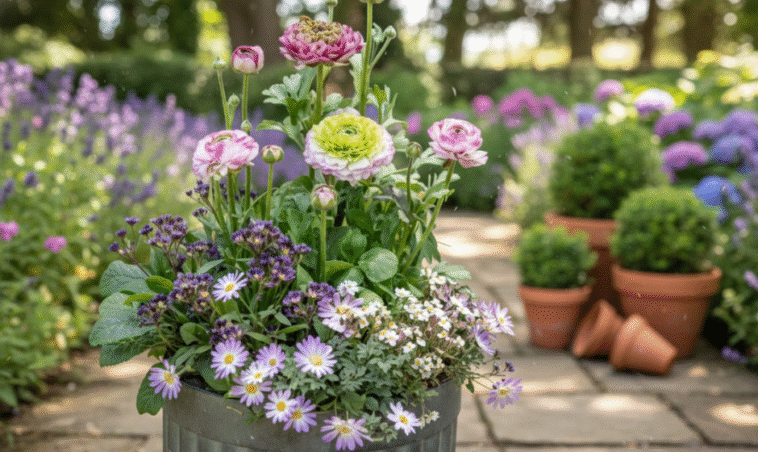
Plant ranunculus in pots or wooden boxes alongside trailing ivy or dusty miller for visual contrast.
3. Wedding or Event Gardens
White and pastel ranunculus flowers create soft, romantic borders that photograph beautifully.
4. Mixed Borders
Combine with other white flower cup varieties like lisianthus or roses for textural balance.
The Symbolism and Cultural Significance
The buttercup flower symbolizes radiant charm and attractiveness in the language of flowers. Giving someone ranunculus means “you are dazzling,” making it a favorite in wedding bouquets and Valentine’s arrangements.
Historically, ranunculus were cultivated in Persia and brought to Europe during the 16th century, where they became royal favorites. Today, they’re still cherished worldwide for their timeless elegance and versatility.
Sustainability and Eco-Friendly Gardening with Ranunculus
When grown responsibly, supports eco-conscious gardening:
- Choose locally sourced corms to reduce carbon footprint.
- Use compost instead of synthetic fertilizer.
- Collect rainwater for irrigation.
- Attract pollinators like bees and butterflies by pairing ranunculus with nectar-rich plants.
With simple sustainable steps, your garden can flourish while protecting the environment.
Pros and Cons of Growing
Pros
- Stunning, long-lasting blooms.
- Perfect for cut flowers and bouquets.
- Adaptable to both garden beds and containers.
- Adds instant elegance and color variety.
Cons
- Sensitive to extreme heat or frost.
- Requires proper drainage.
- Needs annual replanting in colder regions.
Despite these minor challenges, the visual reward far outweighs the effort.
Ranunculus vs. Buttercup: Are They the Same?
While many use the term “buttercup” for ranunculus, not all buttercups belong to the Ranunculus asiaticus species. Wild buttercups are typically simpler, with fewer petals and smaller blooms.
However, the garden variety ranunculus offers a fuller, more decorative bloom making it the preferred choice for ornamental gardening and floral arrangements.
Conclusion:
Planting ranunculus is one of the easiest ways to add professional-looking color and charm to your garden. With the right soil, sunlight, and simple care routine, you’ll be rewarded with lush, buttercup-like blooms that last all spring.
Whether you’re filling borders, designing bouquets, or brightening patios with pots of white, pink, and orange petals, ranunculi flowers will never disappoint. Once you see their layered beauty unfurl, you’ll understand why gardeners everywhere can’t resist growing them year after year.
FAQs
1. What is a ranunculus flower?
This is a layered-petal bloom, also known as a buttercup, grown from corms. It’s admired for its rich colors and long-lasting blossoms.
2. How do I plant ranunculus bulbs?
Soak the corms for 3–4 hours, plant claws down about 2 inches deep, and space them 5 inches apart in well-draining soil.
3. When should I plant ranunculus?
In cooler climates, plant in early spring. In warmer zones, fall planting ensures winter and early spring flowers.
4. How long do ranunculus flowers last?
In the garden, blooms last several weeks; as cut flowers, they stay fresh for 7–10 days with proper care.
5. Can ranunculus be grown indoors?
Yes, can thrive in pots near sunny windows if the temperature stays cool and the soil drains well.
6. What is the difference between ranunculin and buttercup?
Buttercup refers to the broader Ranunculus family, while the Persian ranunculus is the ornamental type known for lush petals.
7. Are ranunculin perennials or annuals?
They are technically perennials in mild climates but are often grown as annuals in colder regions due to frost sensitivity.